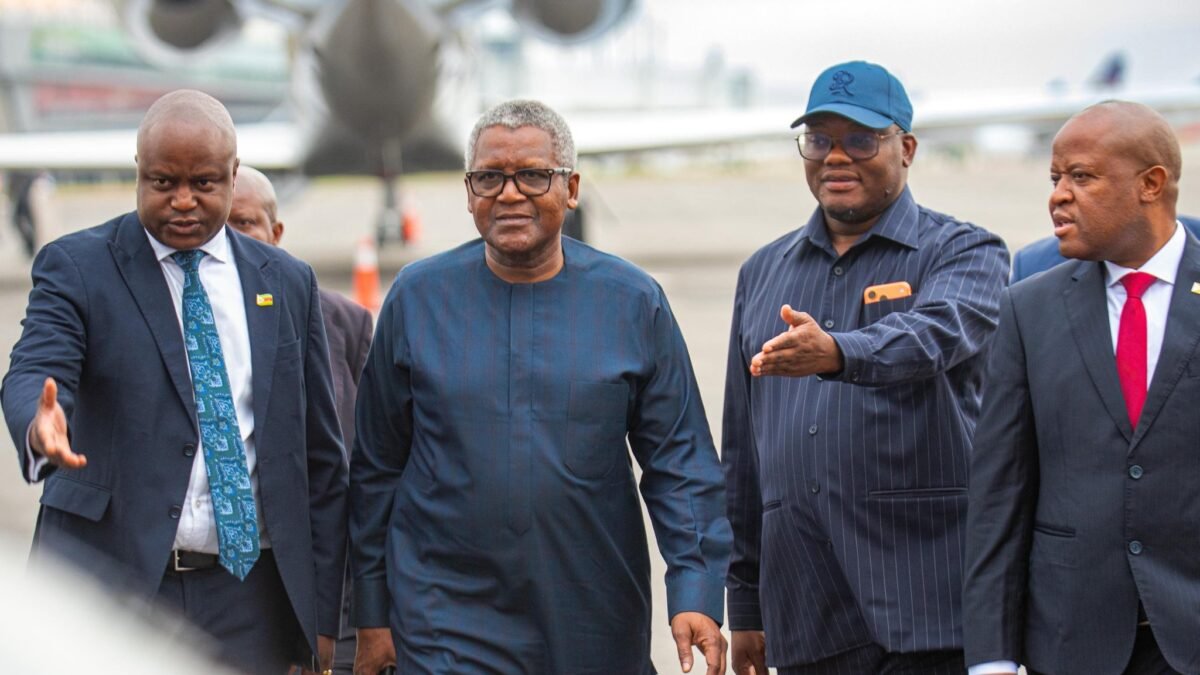
The Dangote Petroleum Refinery has been celebrated as a symbol of African industrial ambition following its $4.1 billion Initial Public Offering (IPO). Yet beneath the rhetoric of African progress lies a deeper contradiction: expanding African capitalism is not the same as liberating Africa.
There are three fundamental problems with presenting Dangote’s fossil-fuel empire as the future of African energy.
First, local refining is not energy independence.
Refining oil on African soil may reduce our reliance on imported refined petroleum, but it does not free us from fossil fuels. It reproduces dependence on a polluting, climate-damaging energy system whose prices remain vulnerable to global conflicts and market shocks. We cannot achieve genuine energy sovereignty by changing where we process oil while remaining dependent on oil itself. Africa needs bold investment in decentralised renewable energy, affordable electricity and clean technologies that serve communities rather than perpetuate fossil-fuel dependence.
Second, Black capitalism is not Pan-African liberation.
The rise of an African billionaire may challenge foreign corporate dominance, but Black ownership alone does not guarantee popular prosperity. When wealth accumulates in the hands of a few while millions struggle with unemployment, poverty and the rising cost of living, the structures of exploitation remain intact. Africa cannot measure its progress by the number of billionaires it produces or the size of their empires. Industrialisation must be judged by whether it improves people’s lives, redistributes economic power and guarantees dignity for the majority. Replacing foreign capitalists with African capitalists does not, in itself, transform the conditions of the African working class.
Third, this is the logic of disaster capitalism.
The American war in Iran and disruptions around the Strait of Hormuz have exposed Africa’s vulnerability to global oil shocks. In this context, expanding fossil-fuel empires is presented as a solution to the crisis, even though continued dependence on oil leaves African economies exposed to the next geopolitical shock. Disaster capitalism turns collective suffering into an opportunity for private accumulation. Rather than treating the crisis as a warning to accelerate the transition away from fossil fuels, it uses the crisis to justify deeper investment in the very system that perpetuates our vulnerability.
Africa must reject the false choice between importing petroleum and refining it locally. Neither option, on its own, guarantees energy sovereignty or economic liberation. We need publicly accountable energy systems, decentralised renewable power, worker-centred industrialisation and a just transition that places communities at the heart of economic planning.
Pan-Africanism must mean more than transferring ownership of exploitative industries from foreign corporations to African billionaires. It must mean transforming the economic structures that keep our people poor while concentrating wealth and power in a privileged minority.
Black excellence cannot be reduced to the accumulation of private wealth. African empowerment cannot be measured by the success of individual capitalists. And energy sovereignty cannot be built on permanent dependence on fossil fuels.
Africa must stop flirting with decadent capitalism and begin building an economy that puts people and the planet before profit.
Our ambition must not be to Africanise exploitation but to abolish it.


Comments
Be the first to comment.