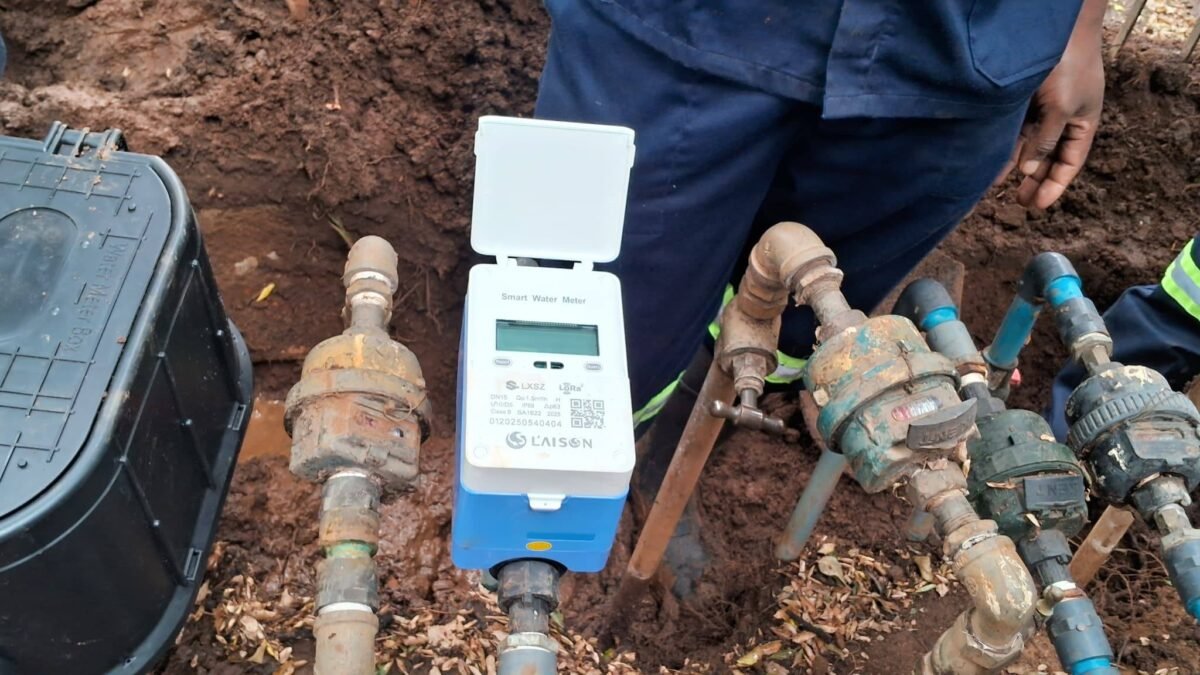
Harare City Council has set a target to recover more than ZiG11 billion and improve revenue collection through prepaid water meters.
Council is owed by residents, businesses, government departments and other local authorities.
Presenting the 2027 budget last Thursday, Finance and Development Committee chairperson Councillor Jubilation Shoko said the proposed system would enforce payment for current consumption while addressing outstanding arrears.
“The proposal intends to use smart meters to both enforce payment for current consumption and recover outstanding debts,” he said.
US$369m Allocated to Water
The proposal comes as council has allocated US$369.5 million to Water, Sanitation and Hygiene (WASH), representing 45 percent of its proposed US$818.3 million budget for 2027.
The allocation is expected to fund pipe replacement, infrastructure upgrades, new pumps and water-treatment improvements aimed at raising production to 520 megalitres.
Council reported that it replaced 66 kilometres of its targeted 106km water network in 2026 and installed 85,301 smart meters.
However, the prepaid system’s implementation details, particularly how existing debts would be recovered without placing an additional burden on residents, are yet to be finalised.
“We have put it out there as a proposal, and we need to work on the modalities, making sure that, of course, it will not burden our residents,” Shoko said.
Revenue Pressures
The proposed intervention comes amid mounting questions over council’s expenditure priorities and its capacity to translate budget allocations into improved services.
Between January and September 2026, salaries accounted for 52 percent of council’s ZiG7.297 billion expenditure, according to the figures provided.
The issue of huge salaries has remained a bitter one for residents.
According to the Commission of Inquiry led by Justice Cheda council executives collectively earned about US$500,000 monthly.
They also used US$1 million on vehicles and US$124,000 on foreign travel.
Executive salaries were subsequently cut by 20 percent following a ministry directive.
Meanwhile, water and sanitation infrastructure remains under pressure.
In a 2025 submission to Parliament, council reported that 411 million litres of raw or partially treated sewage entered rivers daily.
A September 2025 audit also found that 50 of 59 public boreholes equipped with chlorinators had no chlorine.
The proposed smart-meter rollout therefore raises a broader question: whether improved revenue collection will be matched by sustained investment in infrastructure and better service delivery.
For residents, the success of the 2027 water budget will ultimately depend not only on council’s ability to collect what it is owed, but also on its capacity to provide reliable water and sanitation services in return.


Comments
Be the first to comment.