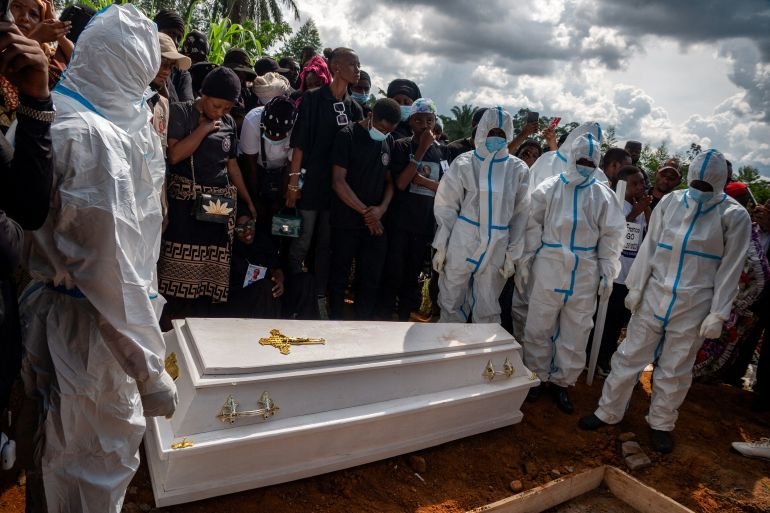
The Ebola outbreak in DR Congo is now the largest in DRC history, and the second-largest ever recorded.
As of 1 November, DRC had 10,532 confirmed cases and 5,126 confirmed deaths, across 67 health zones in 8 provinces.
Ituri remains the epicentre.
This outbreak is caused by Bundibugyo virus, not the better-known Zaire strain.
There is no licensed vaccine or specific treatment for Bundibugyo but that is changing.
On 23 October, the Tumaini trial meaning “hope” launched in Bunia.
This week WHO added two new Bundibugyo-specific vaccines: ChAdOx1 from Oxford / Serum Institute, and mRNA-1469 from Moderna.
It is the first time such vaccines are tested during an outbreak.
Results are expected in early 2027.
Zimbabwe angle: No case here
No Ebola case has been reported in Zimbabwe.
WHO rates risk as very high in DRC, high for countries bordering DRC, and low for Zimbabwe.
Zimbabwe does not border DRC, and WHO advises against travel or trade restrictions.
Uganda, which does border DRC, announced on 25 October a 21-day quarantine for citizens returning from DRC.
Kenya has 9 cases, Nigeria 1 case, both linked to regional travel.
Ebola spreads through blood or bodily fluids, not air or casual contact.
Symptoms can take up to 21 days fever, headache, vomiting, diarrhoea, and in severe cases bleeding.
Comments
Be the first to comment.