By Wisdom Mumera
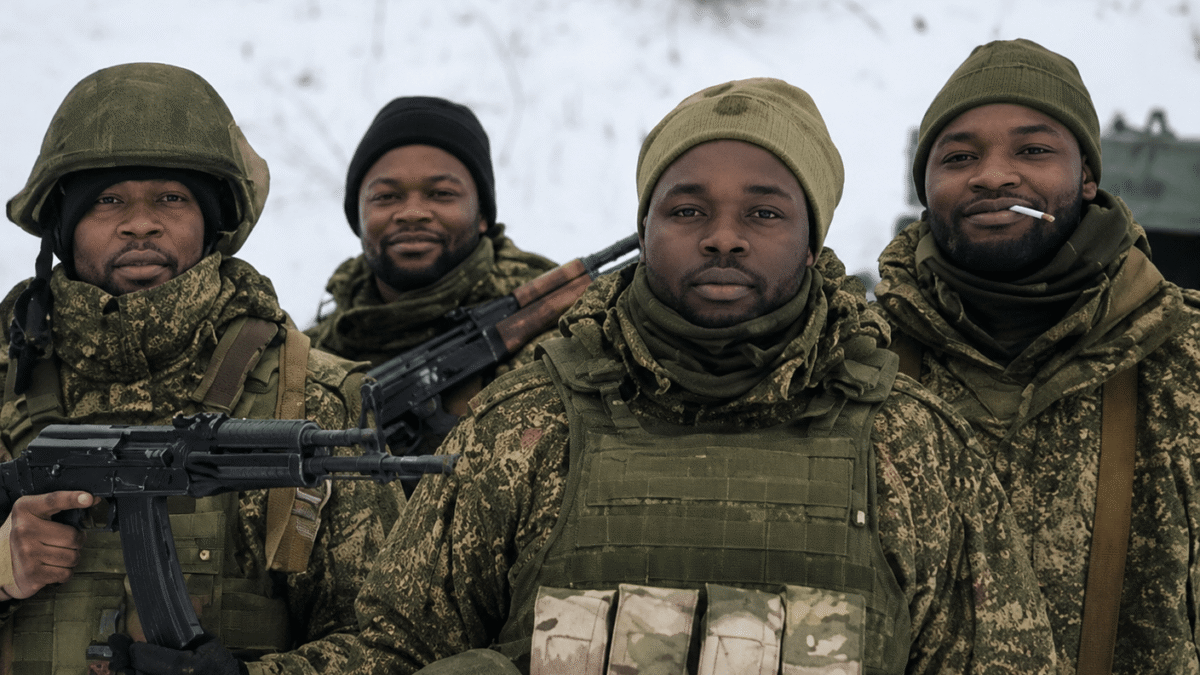
Ukrainian President Volodymyr Zelensky has named Zimbabwe among 47 countries whose citizens Russia is using to fight its war in Ukraine.
Zelensky said the victims were lured through “deception and tricks” and are dying on the battlefield.
He said this while addressing the 81st session of the United Nations General Assembly on Wednesday.
Zelensky said Moscow was deploying foreign nationals to cover manpower shortages in the four-year-old conflict.
“We know that Russia uses citizens of 47 countries in its war.
“In this war, Ghana, Nepal, Tajikistan, India, Yemen, Kenya, Zimbabwe, Cuba, Belarus, Sudan, South Africa, and many, many others,” Zelensky said.
“And from time to time, we receive requests to send particular POWs back home.
“And through the videos from our drones, we also see people dying on the battlefield who are not Russians, people from your countries, 47 countries, who ended up in Russia through deception and tricks.”
He made a direct appeal to the governments concerned:
“So I want to speak directly to every representative of these 47 countries.
“You know what Russia is doing with your people, your citizens. Take care of them, and do not let them end up on another front.
“Do not let Putin drag you into this war.”
“Do not let Russia put out its fires, cover up its shame, and pay for its madness with the lives of your people,” he added.
Widespread Russian Recruitment
Zelensky’s remarks came as reports of deceptive recruitment of Africans for the Russian military have intensified across the continent.
Zimbabwe has confirmed it is among the affected countries.
Of those, 15 have been confirmed dead and 66 still alive.
“Fifteen Zimbabwean nationals have lost their lives in foreign battlefields after being deceived into enlisting in foreign wars,” Soda said.
“This is not a matter of legitimate military service.
“It is a sophisticated scheme of deception, exploitation and human trafficking.”
The government said victims were targeted on social media by fraudulent employment agencies promising lucrative civilian jobs as firefighters, logistics officers and private contractors in Russia.
They were offered attractive salaries and safe conditions.
Investigations by Zimbabwean media outlet CITE found that recruits were added to WhatsApp groups.
They were Russian invitation letters under the pretext of cultural visits, and given 30-day visas.
Many were unemployed men or Zimbabweans working as Uber drivers in South Africa.
“Some of those who have been recruited were mostly Uber drivers recruited in South Africa with no army experience and are trained for seven days then deployed,” a Zimbabwean source fighting in Donbas told CITE.
Once in Russia, the pattern is consistent, according to both testimonies and court filings.
Passports are confiscated, one-year contracts written in Russian are signed, and recruits are sent to the front after minimal firearms training.
“When they reach the front line, they take their passport and only promise to give it back after a year,” the source said.
Soda said those trapped “receive little to no training and are placed in life-threatening situations.
When they are injured, killed or captured, the recruiters vanish, leaving families in Zimbabwe with no information, no support and no one to hold accountable.”
Harare is now engaging Moscow to secure the return of survivors and repatriate the bodies of the dead.
In July, a 48-year-old Harare man, Oscar Sifelani Mtshiya, was charged with human trafficking for allegedly recruiting five Zimbabweans with four accomplices based in Russia.
Continental Pattern
Zimbabwe is not alone.
Kenya has said more than 1,000 Kenyans were recruited, while South Africa, Ghana and Nigeria have reported similar cases.
India has confirmed that 227 of its nationals were recruited into the Russian armed forces, with 51 deaths.
Russia has denied illegally recruiting foreign citizens, though it has acknowledged foreign nationals serve under contract.
For Zimbabwe, which maintains close political ties with Moscow, the issue presents a diplomatic test.
Families of victims have demanded action while evidence mounts of a locally-rooted, organised network funnelling young men to the frontlines of Europe’s deadliest conflict since World War II.
Comments
Be the first to comment.