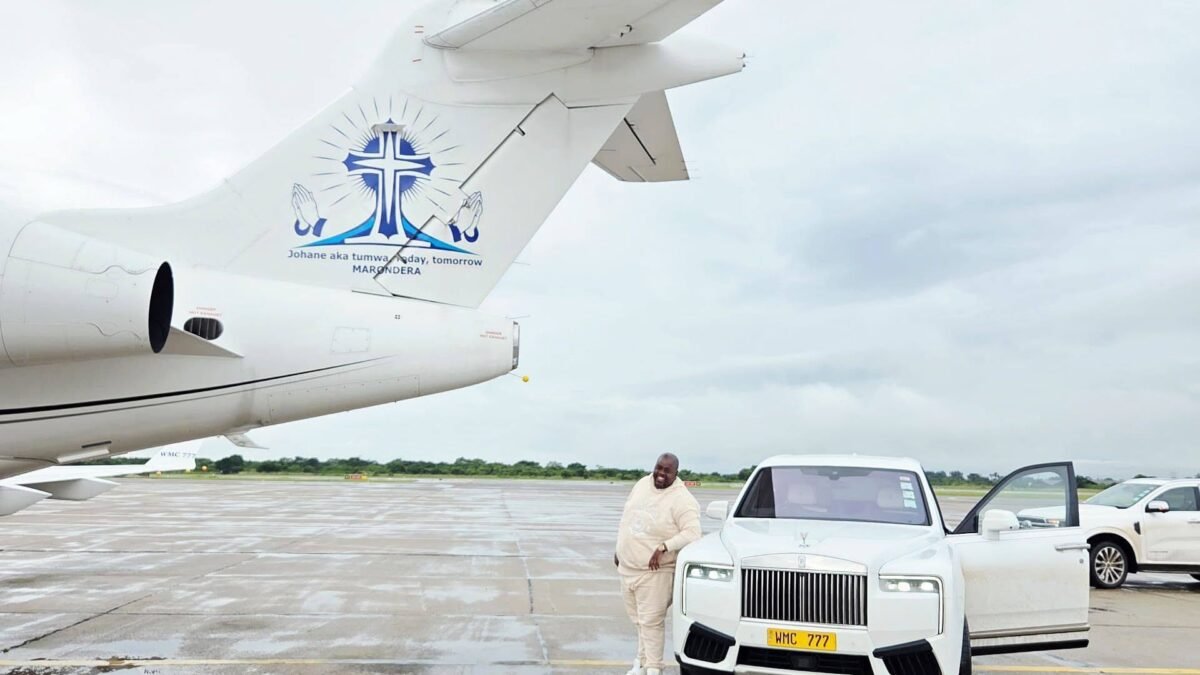
HARARE — Wicknell Munodaani Chivayo, popularly known as “Sir Wicknell”, was one of Zimbabwe’s most controversial businessmen, whose extraordinary rise to wealth, high-profile philanthropy, political connections, and lavish lifestyle kept him in the public eye.
Chivayo, 43, died on Wednesday, September 30, 2026, when a helicopter crashed in the Marondera area east of Harare. His wife, Lucy “Lulu” Muteke, was also among those killed. Authorities said there were no survivors.
His death brought to an abrupt end the life of a businessman who had built an unusually visible public profile, regularly sharing images of luxury cars, private aircraft, expensive gifts and meetings with some of Africa’s most powerful political figures.
From rags to riches?
Chivayo was born in Zimbabwe in 1982. In an account of his early life, he said his father died when he was young and that he began working while still trying to build his future.
He told The Herald in 2024 that one of his father’s friends, businessman Robson Musane, allowed him to work as a wages clerk and supervise buses. Chivayo described that period as the beginning of his journey into business.
He later moved into the energy and infrastructure sector, becoming closely associated with Intratrek Zimbabwe, the company he founded.
Intratrek became particularly prominent through its involvement in the Gwanda Solar Project, a major government-backed power project that was initially valued at about US$172 million. Chivayo told The Herald that his main business interests included fuel, energy, engineering, procurement, construction and power projects.
The Gwanda Solar Project controversy
The Gwanda project also became one of the most controversial chapters of Chivayo’s career.
His company became involved in legal disputes and criminal proceedings connected to the project and payments made under the contract. Chivayo denied wrongdoing.
The legal history was complex, with proceedings extending over several years. Recent profiles report that criminal proceedings against him ultimately did not result in a conviction, while the Supreme Court in 2023 ruled in a separate dispute that the Intratrek contract remained valid.
The project nevertheless cemented Chivayo’s reputation as a businessman operating at the intersection of large state contracts, infrastructure and politics.
Wealth as a public brand
Unlike many wealthy businesspeople, Chivayo made little attempt to hide his lifestyle.
His social media presence became central to his public identity. He regularly displayed luxury vehicles, designer clothing, expensive watches, private aircraft and properties.
He was also known for giving away substantial amounts of money and expensive vehicles to musicians, religious figures, sports personalities, lawyers and members of the public.
His generosity earned him a strong following among some Zimbabweans, while the conspicuous nature of his spending also generated questions about the sources of his wealth.
In a 2024 interview, Chivayo said his wealth came from legitimate business interests in Zimbabwe and elsewhere in the region, particularly in fuel, energy and infrastructure.
The businessman who gave away millions
Philanthropy became another defining feature of the “Sir Wicknell” persona.
Chivayo supported schools, sports organisations, and individuals, and also made large cash and vehicle donations.
President Emmerson Mnangagwa, in his tribute following Chivayo’s death, described the family as highly philanthropic and said their charitable activities had touched many lives.
Chivayo’s supporters frequently pointed to these donations as evidence of his willingness to share his wealth, while critics questioned the scale and visibility of his spending.
Close to presidents
Perhaps the most striking aspect of Chivayo’s public life was his access to senior political leaders.
Although he never held elected office, he regularly posted photographs and videos of encounters with presidents and other influential figures across Africa.
He had a close relationship with Zimbabwean President Emmerson Mnangagwa and was publicly associated with other African leaders, including Kenyan President William Ruto, South African President Cyril Ramaphosa, Tanzanian President Samia Suluhu Hassan, Zambian President Hakainde Hichilema, and Ugandan President Yoweri Museveni.
His relationship with Ruto attracted considerable attention.
In August 2026, Chivayo posted a video showing Ruto personally driving him and his wife to a helicopter after an event at the Kenyan president’s Kilgoris residence. The encounter became one of the most widely shared examples of Chivayo’s extraordinary access to political power.
Following his death, Ruto described Chivayo as a dear friend and remembered him for his warmth, energy and belief in Africa’s potential.
A controversial public figure
Chivayo’s wealth and political relationships also made him a controversial figure.
His business dealings, particularly those involving government contracts, attracted scrutiny over the years. He faced allegations relating to corruption and other financial wrongdoing, which he denied. Some legal cases ended without convictions.
His relationship with the political establishment was similarly scrutinised, particularly because of his public support for Mnangagwa and his frequent appearances alongside senior officials.
In 2005 Chivhayo jailed for five years for money laundering which involved R837 000 by the High Court however, two years were conditionally set aside leaving him to serve an effective three years in prison.
Family life
Chivayo had two children from his previous marriage to Sonja Madzikanda, which ended in divorce in 2024.
He later married Lucy “Lulu” Muteke in 2025. The couple frequently appeared together in his social media posts and travelled together.
Their lives were cut short together when the helicopter they were travelling in crashed in Marondera on September 30.
His final hours
In the hours before his death, Chivayo remained active on social media.
He posted tributes and announced expensive gifts for members of his legal team, continuing a pattern that had become synonymous with his public persona.
Later that day, the helicopter carrying Chivayo, his wife and others crashed in rural Marondera.
The tragedy transformed his social media pages from a showcase of wealth and generosity into a digital memorial, as messages of condolence poured in from Zimbabwe and beyond.
A complicated legacy
Wicknell Chivayo leaves behind a complicated and highly visible legacy.
He rose from relatively modest beginnings to become a prominent player in Zimbabwe’s energy and infrastructure sector. He built a public identity around extraordinary wealth, philanthropy and access to powerful people.
He was celebrated by supporters for his generosity and criticised by others over his business dealings, political connections and conspicuous lifestyle.
What is undisputed is that few Zimbabwean businessmen of his generation attracted the same level of public attention.
From the Gwanda Solar Project to luxury cars, multimillion-dollar gifts, philanthropy, football and meetings with African presidents, Chivayo turned his personal story into a highly public brand.
His death at 43 now closes one of the most closely watched chapters in Zimbabwe’s modern business and celebrity culture.
The circumstances surrounding the helicopter crash remain under investigation.
Comments
Be the first to comment.