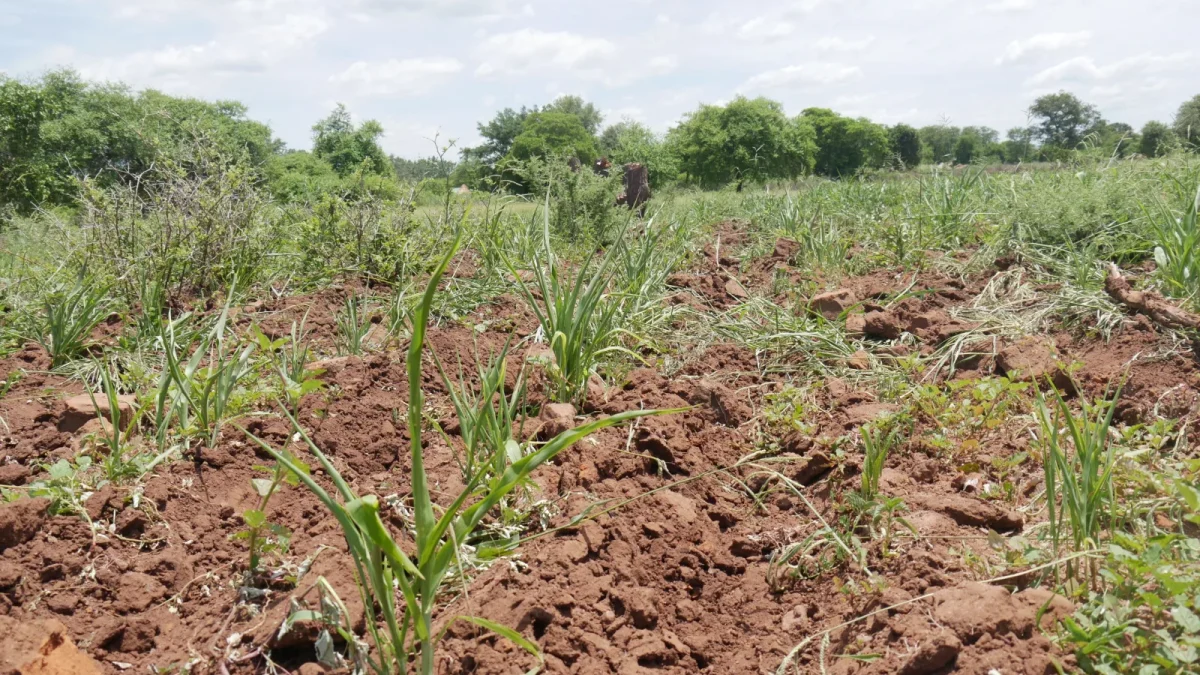
When we talk about industrialising Southern Africa, the conversation often begins with mines, oil, gas, electricity and infrastructure. Perhaps it should begin somewhere much closer to the soil. Before Southern Africa can become an industrial powerhouse, it must answer a more fundamental question: Can the region feed itself, and can it turn its agricultural wealth into an engine of industrialisation?
Southern Africa has millions of hectares of agricultural land, diverse climates, livestock resources, major river systems and a large rural population whose livelihoods depend directly or indirectly on farming. Yet the region continues to import significant quantities of food and agricultural products that it has the potential to produce itself. This is more than an agricultural problem. It is an industrial problem, a trade problem and, ultimately, a development problem.
For too long, agriculture has been viewed primarily through the lens of farmers planting crops and harvesting them. But farming is only the beginning of the value chain. A kilogram of maize can become animal feed, starch, cooking products or industrial ingredients. Milk can become cheese, yoghurt, butter and powdered milk. Fruit can become juice, concentrates, canned products and exports. Cotton can become yarn, textiles and clothing. Sugar cane can support food production, ethanol and other industries. Livestock can generate meat-processing, leather, pharmaceutical and fertiliser industries.
This is where the real opportunity lies. Southern Africa should stop thinking about agriculture simply as a sector and start thinking about it as an industrial ecosystem.
Consider cotton. If cotton produced in Zimbabwe or Zambia is exported as raw fibre, much of the economic opportunity leaves with it. But imagine that same cotton moving through a regional value chain. It is ginned locally, spun into yarn, turned into fabric and eventually transformed into clothing that is branded, marketed and sold across Africa and international markets. The value of the original crop multiplies at every stage, while creating businesses and employment in farming, manufacturing, transportation, packaging, finance, design, retail and logistics.
That is how agriculture becomes industrialisation.
The same principle applies to food. Southern Africa should not simply aim to produce more maize, wheat, fruit, livestock or dairy products. It should develop the processing industries that turn those commodities into higher-value products. The region should be asking how much of the food consumed in its cities, hotels, schools, hospitals and supermarkets can be produced, processed and packaged within Southern Africa.
Food security is also economic security. The COVID-19 pandemic, geopolitical conflicts and disruptions to global supply chains demonstrated that countries and regions that cannot reliably feed themselves remain vulnerable to events beyond their control. Southern Africa does not need to produce everything in every country, but it does need a more integrated regional food system in which countries specialise according to their strengths while trading efficiently with one another.
One country may have a comparative advantage in maize, another in wheat, another in livestock, another in horticulture, another in sugar, another in fisheries and another in food processing. The objective should be to create a Southern African food economy, where production, processing, storage, transportation and distribution operate across borders.
But water will determine how far this ambition can go. Agriculture cannot be transformed without reliable access to water, and Southern Africa faces increasing pressure from droughts, climate variability and changing rainfall patterns. The region therefore needs to treat water infrastructure as an economic investment rather than simply a humanitarian necessity. Dams, irrigation systems, water recycling, efficient irrigation technologies and regional water-management projects should be placed at the centre of agricultural and industrial planning.
The question should not simply be how much rain a country receives in a particular season. It should be how much productive agriculture its water infrastructure can support throughout the year.
Another major weakness is the gap between the farmer and the consumer. Farmers produce, and consumers buy, but between the two there is often insufficient processing, storage, refrigeration, packaging, transportation and financing. This is the missing middle in African agriculture.
That gap represents an enormous industrial opportunity. Build food-processing plants near production areas. Develop cold chains and modern storage facilities. Improve rural roads and rail links. Establish aggregation centres. Create agricultural finance mechanisms. Develop packaging industries and connect farmers to supermarkets, hotels, schools, hospitals and export markets. Agriculture then becomes much more than farming; it becomes a network of interconnected industries.
Smallholder farmers must be at the centre of this transformation. Industrial agriculture should not become another mechanism for pushing small farmers to the margins. Millions of Southern Africans depend on small-scale agriculture, and the answer is to connect them to industrial value chains through cooperatives, contract farming, aggregation, extension services, digital marketplaces and access to finance.
A smallholder farmer should not have to become a multinational corporation to participate in a modern agricultural economy. The systems around that farmer should be designed to aggregate production, improve productivity and connect it to profitable markets.
Agricultural industrialisation should also create industries that support farming itself. Southern Africa imports significant quantities of agricultural inputs and equipment. There is an opportunity to develop regional industries producing fertiliser, irrigation equipment, tractors and other machinery, seeds, storage systems, packaging and agricultural technology.
This creates an important economic relationship: agriculture creates industry demand, while industry makes agriculture more productive. That is precisely the kind of relationship required to build a diversified economy.
The region’s young people could be one of the greatest beneficiaries. For too many young Africans, farming is associated with poverty, subsistence and limited opportunity. That perception needs to change. The farmer of the future should be an entrepreneur using technology, data, artificial intelligence, drones, digital marketplaces, modern irrigation and sophisticated financial tools.
Agriculture can become one of the places where Africa’s digital revolution meets its physical economy.
Southern Africa should also think in terms of integrated agricultural corridors linking farms to processing centres, cities, railways, ports and consumers. Agricultural production in Zimbabwe, Zambia, Malawi, South Africa, Mozambique, Botswana and Namibia should increasingly be connected to regional processing and distribution systems, allowing products to move efficiently across borders and ultimately into African and global markets.
The objective should be straightforward: produce more, waste less, process more and export more.
Most importantly, Southern Africa must retain a greater share of the value created.
The agricultural question is therefore about much more than food. It is about economic sovereignty. A region that can feed itself has greater resilience. A region that processes its own agricultural products creates jobs. A region that manufactures its own agricultural inputs builds industrial capacity. A region that exports finished food, textiles and other manufactured products earns more foreign exchange. And a region that connects agriculture to manufacturing begins to create the foundations of a genuine industrial economy.
Southern Africa has spent decades discussing land reform, food security, rural development and agricultural productivity as separate issues. They should be brought together under one larger vision: agriculture as industrial policy.
The field and the factory should no longer be treated as two different worlds. The field should feed the factory. The factory should support the field. The railway should connect them. The port should connect them to the world. And the regional market should ensure that an increasing share of the value created remains within Southern Africa.
The future of Southern African agriculture should therefore not simply be measured in tonnes harvested. It should be measured in factories built, products manufactured, jobs created, exports earned and communities transformed.
The region has the land. It has the people. It has the markets. It has the resources.
What it needs now is the industrial vision to connect them.
Southern Africa cannot industrialise without agriculture. And agriculture cannot reach its full potential without industrialisation. The two must rise together.


Comments
Be the first to comment.