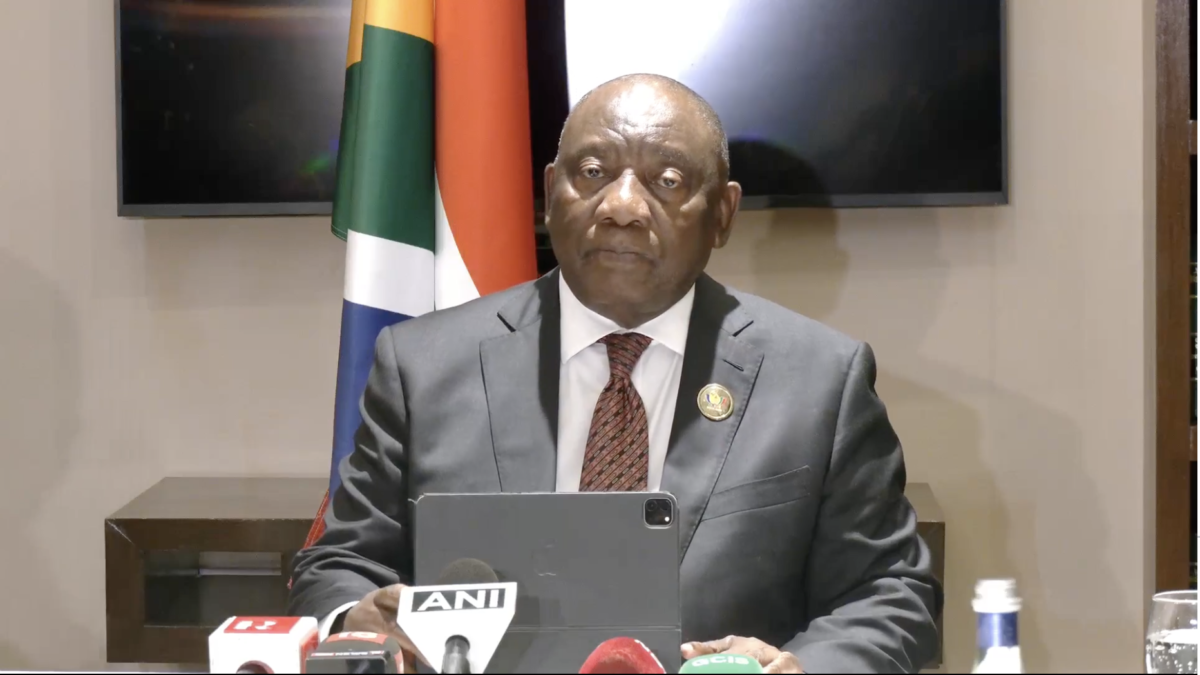
South African President Cyril Ramaphosa has defended the decision by Home Affairs to withdraw the intake of asylum-seeker applications, saying the government needed to assess the implications of a Constitutional Court ruling following violence that rocked some parts of the country.
Speaking to the media on Friday, Ramaphosa expressed regret over the unrest, saying the implementation of the Constitutional Court decision may have been premature.
“We regret the violence that broke out throughout the country. Now, obviously, that is due to that Constitutional Court decision,” he said, adding that the ruling needed to be properly processed, interpreted and evaluated.
The Department of Home Affairs withdrew the directive on Friday after refugee reception offices were overwhelmed by applications, while officials faced safety risks and concerns over public order.
Ramaphosa rejected suggestions that suspending implementation amounted to contempt of court, insisting that the government respected the judiciary and the rule of law.
“Our courts don’t expect us to just instantly implement without evaluating the impact that their decisions are going to have,” he said.
He added that the government would assess the implications of the judgement and determine the best way forward, while security agencies worked to contain unrest, particularly in Durban.
The violence followed protests against the processing of asylum applications in Johannesburg’s Soweto township and Durban on Thursday.
Reuters reported that at least 23 cars were torched, with reports of gunfire exchanges during the clashes.
The July 7 Constitutional Court ruling in the Scalabrini Centre of Cape Town matter sought to ensure asylum seekers could access the application process even if they had entered South Africa unlawfully or failed to meet certain procedural requirements.
The ruling does not automatically grant refugee status or legal residence to undocumented migrants; applications must still be assessed individually.
Home Affairs said it would develop a new operational approach to comply with the court order while addressing challenges that emerged during the directive’s implementation.
South Africa has been grappling with a surge in anti-immigrant protests that have strained relations with other African countries and forced thousands of foreign nationals to flee following xenophobic attacks.
Migrants are often blamed for taking away jobs from locals, crime and pressure on public services such as health facilities.



Comments
Be the first to comment.