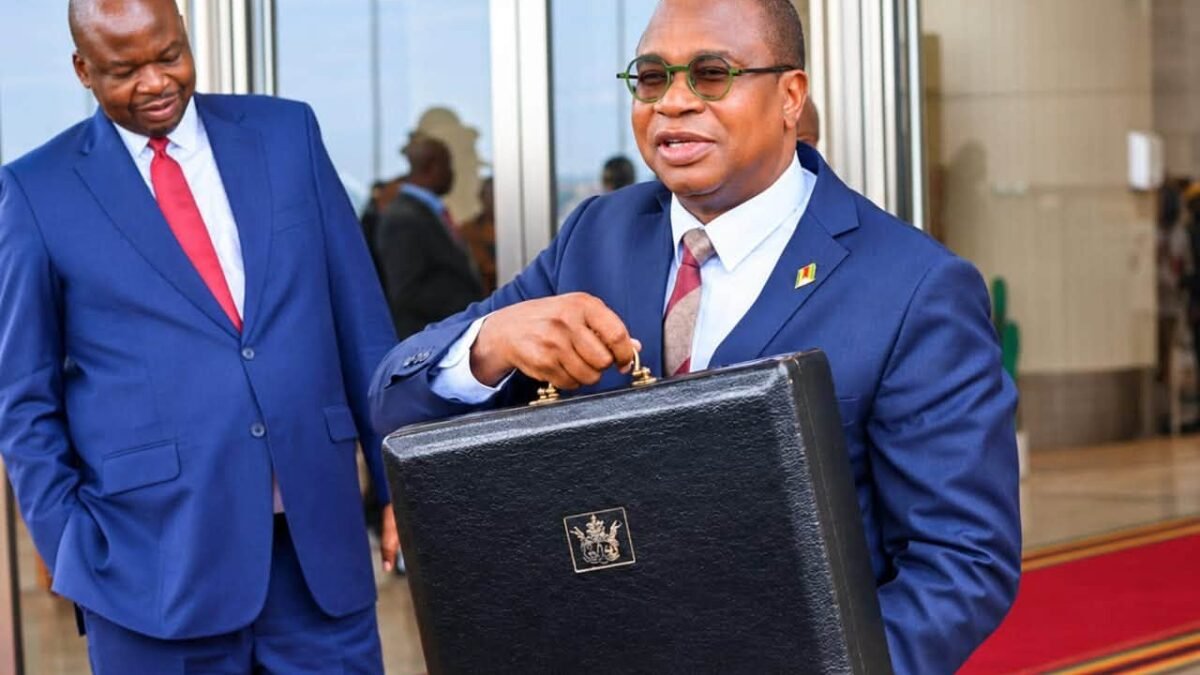
HARARE – Finance Minister Mthuli Ncube has proposed scrapping customs duty on imported mobile phones, raising the tax-free income threshold to US$150 and reducing the Intermediated Money Transfer Tax (IMTT) rates under Zimbabwe’s 2027 National Budget.
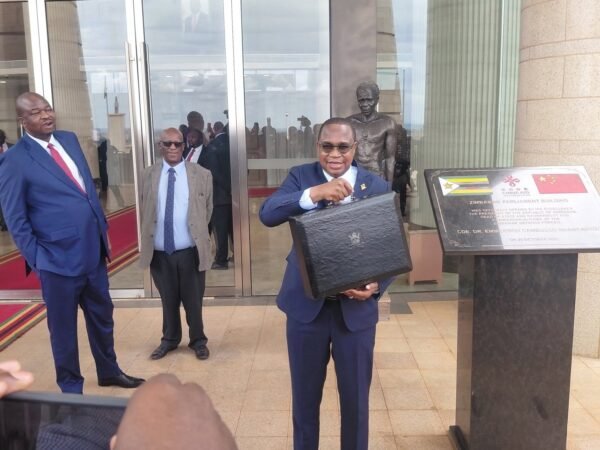
Presenting the budget in Parliament on Thursday, Ncube said the proposals were aimed at easing the tax burden, expanding economic participation and supporting the country’s economic transformation.
Under the proposed changes, customs duty on cellular phones will be reduced from 25 per cent to zero, while the personal income tax-free threshold will increase from US$100 to US$150, or its equivalent in Zimbabwe Gold (ZiG), with corresponding adjustments to the tax bands.
Ncube also proposed reducing IMTT on ZiG-denominated transactions from 1.5 per cent to 1.25 per cent and foreign currency transactions from 2 per cent to 1.75 per cent.
The budget, presented under the theme “Accelerating Economic Transformation and Building Resilience to Climate and Global Shocks”, projects economic growth of 3.5 per cent in 2027, down from an estimated five per cent in 2026, largely due to the anticipated impact of the super El Niño weather phenomenon and drought risks.
The government has set an expenditure ceiling of ZiG358.3 billion, equivalent to approximately US$12.8 billion, against projected revenue collections of ZiG349.5 billion.
A contingency allocation of ZiG10.9 billion has also been included to cushion the economy against severe shocks, particularly drought.
On social spending, the budget allocates ZiG35.5 billion to the health sector, ZiG47.7 billion to primary and secondary education and ZiG21.5 billion to social protection programmes targeting vulnerable groups.
The Ministry of Agriculture, Mechanisation and Water Resources Development will receive ZiG27.6 billion, with the government seeking to strengthen food security ahead of the anticipated drought.
Ncube said the Grain Marketing Board had procured 365,000 tonnes of grain by the end of October as part of efforts to build the country’s strategic grain reserve to 600,000 tonnes by 2027.
The government has also subscribed to the African Risk Capacity sovereign drought insurance policy at a premium of US$3.4 million.
To stimulate industrialisation and domestic production, Ncube proposed making it mandatory for government, mining companies and large entities to procure at least 15 per cent of their input requirements locally, where domestic capacity exists, effective January 1, 2027.
The budget also provides incentives for local fertiliser manufacturing and vehicle assembly, including duty rebates on selected inputs and a full suspension of customs duty on semi-knocked-down vehicle assembly kits imported by approved local assemblers.
On electric vehicles, customs duty will be reduced from 25 per cent to 10 per cent.
The youth sector will receive ZiG1.9 billion to support entrepreneurship and participation in the formal economy, while ZiG1.3 billion has been allocated to sport, arts and culture.
Ncube said the 2027 fiscal policy would focus on consolidating macroeconomic stability, promoting inclusive growth and strengthening the economy’s resilience to climate change and external shocks.


Comments
Be the first to comment.