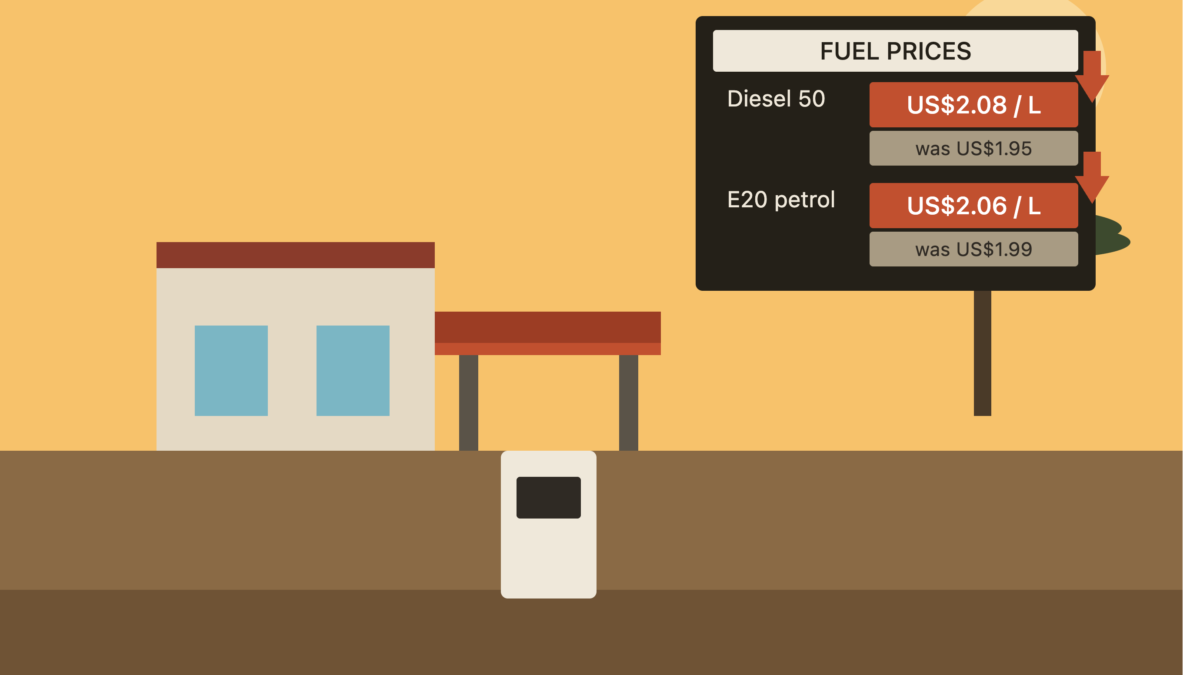
HARARE — Zimbabwean motorists are facing another increase in fuel prices after the Zimbabwe Energy Regulatory Authority (ZERA) announced new prices effective 17 September.
Diesel 50 is now capped at US$2.08 per litre from US$1.95, while E20 petrol has risen to US$2.06 per litre from US$1.99.
In Zimbabwe Gold (ZWG), diesel is pegged at ZWG55.57 per litre, while E20 petrol is ZWG54.97.
The latest adjustment comes just days after the previous fuel-price review, raising fresh concerns about how international oil-market volatility affects Zimbabwean consumers and businesses.
The increase is taking place against a backdrop of renewed instability in the Middle East, where conflict and disruption to oil-producing and exporting infrastructure have placed pressure on global petroleum supplies.
International energy-market data indicate that substantial volumes of Gulf oil production have been disrupted, while crude prices have remained elevated.
Such disruptions can affect countries such as Zimbabwe, which relies heavily on imported petroleum products.
However, attributing the entire increase to the conflict would oversimplify the situation.
The price paid at Zimbabwean filling stations is influenced by several factors, including international petroleum prices, freight and insurance costs, transportation, taxes, levies and exchange-rate considerations.
The economic consequences could extend well beyond motorists. Diesel is an important input for agriculture, mining, haulage, manufacturing and public transport.
An increase in fuel costs can therefore raise the cost of moving people, raw materials and finished goods.
For ordinary consumers, the concern is that higher transport and distribution costs could eventually translate into increased prices for food and other essential goods.
ZERA said it would continue monitoring developments in the international market and reviewing prices, while government interventions remain in place to mitigate the impact of global geopolitical developments on consumers.
The latest increase therefore highlights Zimbabwe’s exposure to events beyond its borders.
A conflict in an oil-producing region can eventually be felt locally through the price of fuel, transport and basic commodities.
The critical question for policymakers is how effectively Zimbabwe can shield consumers from external energy shocks while maintaining reliable fuel supplies and avoiding additional pressure on businesses and household incomes.
Zimbabwean fuel prices remain high compared to neighbouring countries; for example, in Botswana, petrol costs approximately US$1.35, and diesel is around US$1.55.
In Zambia, petrol is about US$1.31, and diesel is approximately US$1.39, while in South Africa, petrol is roughly US$1.65, and diesel is around US$1.82.



Comments
Be the first to comment.