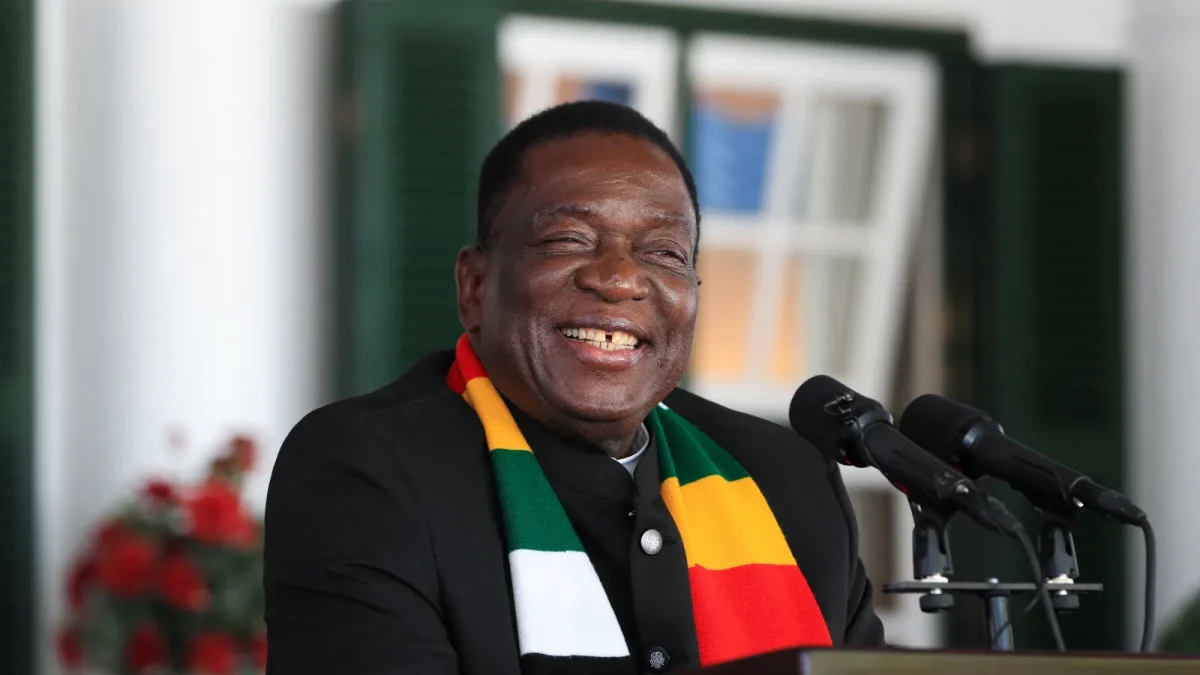
For me President Emmerson Mnangagwa’s invocation of the Munhumutapa identity has opened a question larger than the personality of one president: Can Zimbabwe recover the political imagination of its precolonial civilisation and give it meaning in the modern state?
The answer need not be a literal resurrection of the 15th century Mutapa kingdom.
History cannot simply be reversed. The real possibility is more profound: the recovery of an indigenous philosophy of political authority.
The Munhumutapa state was a complex precolonial polity, with systems of authority, commerce and social organisation. Its history was neither idyllic nor static. It experienced succession disputes, territorial changes and external pressures.
Yet its existence demonstrates a fundamental historical fact: colonialism did not introduce political civilisation to Zimbabwe.
It interrupted an existing African political tradition!
Zimbabwe didn’t not begin with the arrival of whites.
That matters because modern Zimbabwe has largely inherited the institutional vocabulary of the colonial and European state Parliament, political parties, elections, bureaucracy and constitutional law.
Of course these institutions have value, particularly in protecting individual rights, representation and accountability. But alone they cannot answer the deeper question of historical belonging.
This is where Munhumutapa becomes intellectually important.
It represents more than kingship but evokes custodianship, continuity, sovereignty and collective belonging.
Leadership, in this conception, is not merely possession of office which we hate, fight and kill each other for; it is stewardship of a political community and its inheritance.
The challenge, therefore, is not to randomly abolish constitutional democracy and recreate a medieval kingdom with a King at the top.
It is to ask whether Zimbabwe can develop an indigenous constitutional imagination in which modern democratic institutions coexist with African traditions of consensus, customary authority and communal responsibility.
A modern Munhumutapa system would consequently have to be radically different from its historical predecessor.
Its legitimacy can still arise from the Constitution and the consent of citizens, while its cultural authority could draw from Zimbabwe’s indigenous political heritage.
That is the real Munhumutapa question when we whittle away the excitable noise of those who always rush to oppose anything and everything on the social media podiums.
Not the return of a 15th century kingdom, but the return of an African political imagination.
Munhumutapa shouldn’t be reduced to a presidential title or political symbolism, as that will diminish its historical meaning.
If, however, it becomes a serious national conversation about sovereignty, identity, indigenous knowledge and the genealogy of Zimbabwean statehood, it could become something much larger than any individual office-holder.
The kingdom may not return in its ancient form but its political memory can return and help Zimbabwe imagine a state that is modern in institutions, yet African in historical consciousness.
What might an African state look like if it were modern without being culturally derivative?
The question is not about the rejection of constitutionalism. It’s about taking African history seriously enough to make constitutionalism our own.
Comments
Be the first to comment.